

integrative therapy for anxiety in London + Online
Therapy for anxiety
Discover the science-informed approach to break free from anxiety, worry + fear.
hypnotherapy for anxiety
Discover a life beyond anxiety.
What would your life look like if anxiety no longer made your decisions for you?
Imagine facing your challenges with calmness and composure, fully participating in activities you love, and responding effectively to worries without being consumed by them.
Everyone experiences anxiety. It’s a natural part of being human, and can often be a sign we are doing things that are important to us, and pushing us outside of our comfort zone. But when anxiety begins to control your choices and limit your life, it’s time for a different approach.
I bring warmth and compassion alongside evidence-based expertise, Cognitive Behavioural Hypnotherapy for anxiety is a (CBH), and mindfulness practices, helping you to develop the practical skills to manage overwhelming thoughts, reconnect with what truly matters to you, develop self-compassion and take meaningful action even when anxiety is present. So you can build a rich, fulfilling life not by fighting anxiety, but by changing how you respond to it. Your journey toward a new relationship with anxiety begins today.
This is the transformation we’ll work toward together.


When your mind works with you instead of against you, everything changes.
understanding how anxiety works
What is Anxiety?
Anxiety is a natural human response to stress or perceived danger. It’s a common experience where you may feel a sense of unease, apprehension, worry, or fear that can range from mild to severe. This response is part of our body’s built-in “fight or flight” system that helps us react quickly to potential threats.
Everyone experiences anxiety at times, such as before job interviews, important exams or presentations, or when facing significant life changes. It may also be in response to work stress, financial, family or relationship problems. In many cases, this anxiety serves important purposes:
It motivates to prepare for potential challenges.
It keeps us alert and safe from harm.
It can sharpen focus and help us solve problems
While occasional anxiety is normal and even helpful, it can become problematic when it:
- Persists over a long period, even without obvious threats or stressors
Feels overwhelming or out of proportion to the situation
Interferes with daily activities and functioning
Leads to significant distress or avoidance behaviours

When does anxiety become problem?
Anxiety can be problematic when it begins to control your life rather than protect it. You may recognise it’s time to seek support when:
• It limits your activities: You avoid situations that matter to you. Declining social invitations, missing career opportunities, avoiding travel or enjoying personal interests.
• Physical symptoms: Your body shows signs of stress through ongoing headaches, digestive problems, muscle tension, chronic pain or sleep difficulties.
• Emotional well-being suffers: You feel constantly on edge, unable to relax, or experience a pervasive sense of dread that colours everything you do.
• Relationships become strained: You notice yourself seeking excessive reassurance, becoming irritable with loved ones, or withdrawing from important relationships.
• Daily functioning is impaired: Concentration becomes difficult, decision-making feels overwhelming, and productivity suffers no matter how hard you try. Simple tasks take enormous effort, and you might struggle to maintain your usual responsibilities at home or work.
• Life revolves around avoidance: You realise you’re organising your choices around preventing anxiety rather than pursuing what brings you meaning and joy.
• Unhelpful coping strategies: Ongoing anxiety may contribute to overeating, substance use, or other unhelpful ways of coping that create additional problems.
When anxiety creates this ripple effect through multiple areas of your life, it’s not just an uncomfortable feeling; it’s a barrier to living fully. Therapy can help you rebuild a life where anxiety no longer calls the shots.
understanding the connection
Understanding Anxiety
Sometimes, it can be difficult to recognise that it is anxiety causing you to think, feel or behave differently. Understanding the experience of anxiety can help explain why it can feel so overwhelming, as it affects both mind & body.
Anxiety with stress
Anxiety and stress often appear together, creating a challenging cycle that can feel impossible to break. Stress typically relates to external pressures; however, anxiety can persist even when external stressors aren’t present. When combined, the effects can be amplified.
Chronic stress keeps your nervous system in a heightened state, and anxiety about potential stressors can create stress even before challenging situations arise. Your brain’s alarm system has evolved to keep you safe. However, when this system becomes overactive, it responds to situations that don’t actually require “fight-or-flight” activation. Hypnotherapy for anxiety works by calming your overactive nervous system and teaching your mind sustainable skills to respond more appropriately to stress, addressing both immediate symptoms and building long-term resilience.
Anxiety exhaustion
Living with persistent anxiety is mentally and physically draining. Your body wasn’t designed to maintain high alert constantly, and it feels like you’re running on empty. Anxiety exhaustion manifests as chronic tiredness and fatigue, difficulty making decisions, emotional numbness, or feeling overwhelmed by simple tasks. You might find yourself avoiding situations that once felt manageable.
This exhaustion isn’t a sign of weakness. It’s your system’s natural response to prolonged activation. Recovery requires both rest and retraining your nervous system’s response patterns. Evidence-based approaches like ACT and hypnotherapy for anxiety help restore your energy by reducing the mental load of constant worry and hyper-vigilance.
ACT + Cognitive behavioural hypnotherapy for anxiety
An evidence-based approach
My approach to therapy is both evidence-based and deeply human. Our work is active, practical, and results-driven, with a focus on achieving meaningful change. I tailor my approach to your specific needs and preferences using the most effective psychological techniques for you, including:
Acceptance and Commitment Therapy (ACT) – Instead of fighting anxious thoughts, ACT teaches you to acknowledge them without being controlled by them. You learn psychological flexibility, allowing difficult emotions to exist while still moving toward your values. ACT recognises that trying to eliminate anxiety entirely often backfires. The goal becomes building a different relationship with your internal experiences.
Cognitive Behavioural Therapy (CBT) – helps identify the connection between thoughts, feelings, and behaviours. When you understand what is fuelling your anxiety, you can learn to challenge these patterns.
Cognitive Behavioural Hypnotherapy (CBH) – This evidence-based technique uses focused attention and relaxation to access your natural capacity for change. There’s no “trance” or mysterious subconscious work involved.
Hypnotherapy for anxiety does it work? The research consistently shows yes. CBH or HypnoCBT® is a transformative approach. This natural, learnable psychological state helps you access your brain’s capacity for positive change more effectively than traditional talk therapy alone. Research has shown CBT + hypnotherapy to be 70% more effective than CBT alone 1,2
Mindfulness Training – Learn techniques to notice your thoughts and feelings without being overwhelmed by them. Mindfulness helps you observe anxiety with greater calm, reduce automatic reactions to worrying thoughts, and respond to your experiences with kindness rather than criticism.
Life Beyond Anxiety
exclusive client app: your mind works
THERAPY reimagined
Your therapy session ends but your mind keeps working. The insights, the breakthroughs, the moments of clarity don’t pause until your next appointment.
What truly distinguishes my therapy practice is the integration of the latest technology to support your progress between sessions. All clients receive exclusive access to my custom Your Mind Works app. Effectively extending our work together beyond the therapy room and into your daily life.
Traditionally, therapy can leave you navigating between sessions with nothing but good intentions. I created the Your Mind Works app to provide you with personalised support and resources easily accessible whenever you need.
- Personalised Client Space - Your private area with resources and exercises curated specifically tailored for your treatment goals.
- Custom Audio Library - Your personalised self-hypnosis for anxiety and mindfulness audios easily accessed from your device.
- Progress Tracking - Visualise your therapeutic journey and achievements.
- Scheduling + Notifications - Gentle reminders for scheduled activities and therapeutic exercises. Set your own reminders or follow guided practices.
- Guided Journal - Benefit from journaling prompts designed to deepen insights and track progress.
- Mindfulness & Relaxation Collection - Extensive library of guided mindfulness exercises, meditations and breathing techniques.
- Seamless Communication - Share journal entries, exercises or practice results with me before sessions to make our time even more effective.
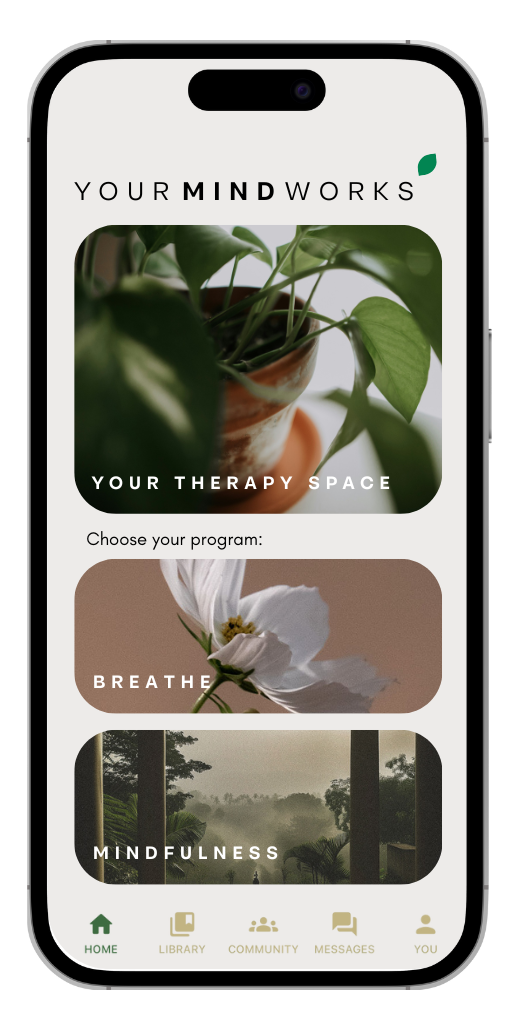

Your Mind Works is available for Apple and Android, or can be easily accessed on your desktop browser and even on your TV.
How we work together
London + online in the UK & internationally

01
book a free consultation
Book your free 30-minute consultation via Zoom to ensure we are a good fit to work together and discuss how I can best support you.

02
in-depth assessment
Our first session is an in-depth assessment, where we will explore your current challenges and goals for therapy. This session is an extended session of 90-minutes.

03
your treatment plan
Following your assessment, we will agree on a personalised treatment plan for you. We work collaboratively to ensure you are happy with the proposed approach, your role in therapy and agree on the initial number of sessions.

04
convenient sessions
Virtual sessions via Zoom are accessible from anywhere in the UK or internationally. Sessions can be arranged at my Harley Street clinic or in peaceful rural North Warwickshire.


What you can achieve
Your personalised plan.
Your experience is unique, and so is your treatment plan. However, here are some of the results you may want to achieve:
Reduced physical symptoms such as muscle tension, pain and sleep issues.
Navigate previously challenging situations (social, travel, work) with practical skills to grow your confidence.
Make decisions based on what matters, rather than what feels safest.
Respond to stress effectively, instead of with avoidance or panic.
Recognise and manage anxious thoughts without being consumed by them.
Break free from exhausting worry cycles and rumination.
Develop greater self-compassion.
Experience calm and presence during daily activities.
Pursue opportunities you may have previously avoided.
Rediscover joy and spontaneity in everyday experiences.
Long-term personal development:
- Build a sustainable foundation of resilience for facing future challenges
- Master practical techniques you can apply independently in any situation
- Understand your unique anxiety patterns and how to interrupt them early.
- Develop a personalised toolkit of strategies.
- Create sustainable self-care practices.
- Learn the power of self-hypnosis.
- Build a sustainable plan for continued growth beyond our sessions together.
Your personalised Programme Includes:
- Comprehensive assessment and treatment plan.
Convenient sessions 1:1 in person or virtually.
Premium “Your Mind Works” app with ‘Your Therapy Space’ for personalised exercises, audios, and messaging on your device.
- Follow up session at 1-month post treatment.
Investment:
Online: £690 (6 + 1 sessions)
London clinic: £970 (6 +1 session plan)
Does executive coaching work? absolutely.
YOUR NEXT STEPS
Anxiety can be overwhelming. But you don’t have to navigate this alone. Professional support provides both the expertise and personalised guidance needed for genuine transformation.
Your anxiety has been trying to protect you. Now you can learn to work with your mind, while building the life you actually want to live.
The research is clear. The methods are proven. The question becomes, are you ready to experience what’s possible you take control of anxiety and move towards your goals and dreams?
Book your complimentary 30-minute consultation call to discover how we can work together.
the results
frequently asked questions
Therapy typically addresses specific mental health concerns, emotional challenges, and psychological patterns that may be causing distress or dysfunction. While coaching focuses primarily on the present and future, helping you clarify goals and create action plans for growth. As an integrative practitioner, I can help determine which approach is right for you during our initial consultation.
The duration of therapy varies depending on your specific goals and the complexity of your situation. For addressing specific issues like insomnia or mild anxiety, 6-8 sessions often create significant improvement. For more complex or longstanding issues, 12-16 sessions may be recommended. We’ll discuss timeline expectations during your initial assessment and regularly review progress.
Research consistently shows that online therapy can be just as effective as in-person therapy for most conditions. For some clients, the comfort of their own environment actually enhances the therapeutic experience. The addition of the “Your Mind Works” app provides continuous support between sessions, which many clients find accelerates their progress compared to traditional weekly therapy alone.
The initial assessment is comprehensive but conversational. We’ll discuss what brings you to therapy, relevant background information, and your goals. I’ll ask questions to understand your unique situation, and you’ll have the opportunity to ask questions about my approach. By the end, we’ll have a clearer direction for our work together and initial recommendations.
My integrated approach combines evidence-based methods with personalized application, focusing on both understanding patterns and creating practical change. The addition of the “Your Mind Works” app provides continuous support between sessions, which significantly enhances the therapeutic process and helps create lasting change more efficiently than traditional weekly therapy alone.
Lucy Mundy
Your Coach
coaching psychologist, brand + business mentor
I am here to empower you with the right tools, knowledge and mindset to transform your ideas into reality and to share your story with the world – through your own unique brand.
You started your business with a passion and desire to make a difference in people’s lives. However, if your business remains your best-kept secret, you’re missing out on incredible opportunities.
With 25 years of experience in business, psychology, and behaviour change, and after a decade of running my own successful therapy and education business, I turned my focus to helping other transformative entrepreneurs and health and wellness professionals. I help you find your voice, get visible and connect with your dream clients so you can grow your business and your success.
Branding is all about human connection, and I share with you my creative, strategic and psychology-led approach to crafting your authentic, meaningful brand. With an all-in-one solution, I blend coaching and support alongside authentic brand and marketing strategies, creative digital design, and in-depth education in today’s essential digital skills – your ultimate toolkit for success, with everything you need to thrive and make your business vision a reality.


grab a coffee AND LET'S CHAT
Schedule a free 30-minute consultation with me, via Zoom to discuss how we can best work together to achieve the results you are looking for in your business. I look forward to meeting you soon, so schedule your call today, via the link below.

1. Ramondo at al, (2021). ‘Clinical Hypnosis as an Adjunct to Cognitive Behavior Therapy: An Updated Meta-Analysis’ International Journal of Clinical and Experimental Hypnosis, 69(2): 169-202
2. Kirsch, I., Montgomery, G., & Sapirstein, G. (1995). Hypnosis as an adjunct to cognitive-behavioural psychotherapy: A meta-analysis. Journal of Consulting and Clinical Psychology, 63(2), 214-220.